Do I Really Need a Website for My Small Business?
- June 19, 2026
Introduction
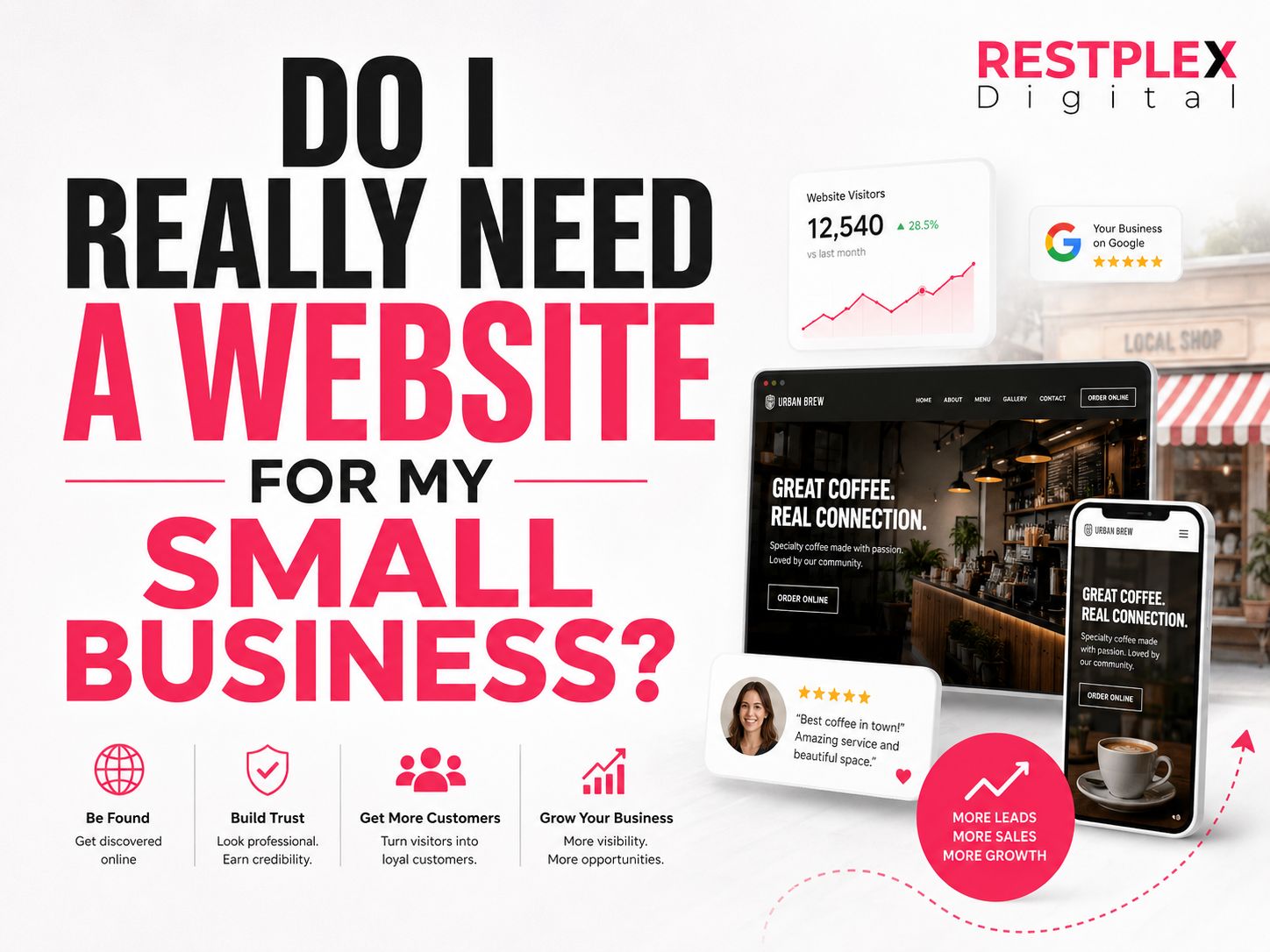
Many small business owners ask the same question: Do I really need a website for my small business?
If most of your customers come from referrals, social media, or word of mouth, building a website may seem unnecessary. However, consumer behavior has changed dramatically. Before contacting a business, most people search online to learn more about its services, reputation, pricing, and legitimacy.
Without a website, potential customers may struggle to find reliable information about your business. In many cases, they will choose a competitor who has a stronger online presence.
Quick Answer: Do Small Businesses Need a Website?
Yes. Most small businesses need a website because it improves credibility, visibility, lead generation, and customer trust. A professional website design and development services helps potential customers find your business through Google Search, learn about your services, and contact you easily.
Even if your business relies heavily on referrals, customers often research you online before making a purchasing decision.
Key Takeaways
- Google’s documentation emphasizes the importance of maintaining a strong online presence to help customers discover and evaluate businesses.
- Your website works 24/7, even when you’re unavailable.
- A website gives you full control over your online presence.
- Social media alone is not a complete digital strategy.
- A professional website supports SEO, lead generation, and long-term growth.
Read Our Guide on How to Build a WordPress Website
What Is a Small Business Website?
A small business website is a company-owned online platform that provides information about products, services, contact details, pricing, testimonials, and company background.
Unlike social media profiles, a website is an asset that your business fully owns and controls. It serves as the foundation of your online presence and helps customers learn about your business whenever they need information.
Why Does a Small Business Need a Website?
A website for a small business serves several important purposes:
- Builds trust and credibility
- Helps customers find your business online
- Generates leads and inquiries
- Supports local SEO efforts
- Showcases products and services
- Provides customer support information
- Strengthens your brand identity
When people hear about your business, one of the first things they do is search for it online. A professional website reassures them that your business is legitimate and trustworthy.
Explore the Small Business Digital Marketing Checklist
Social Media vs. a Website: Which Is Better?
Many business owners believe social media can replace a website. In reality, they serve different purposes.
Social Media
Benefits:
- Helps build awareness
- Encourages engagement
- Reaches existing audiences
- Supports advertising campaigns
Limitations:
- Platform algorithms control visibility
- Account restrictions can impact reach
- Limited ownership and control
- Difficult to rank consistently in Google Search
Website
Benefits:
- Complete ownership and control
- Better search engine visibility
- Higher credibility
- Improved lead generation
- Central hub for marketing efforts
The most effective strategy is to use social media to attract attention and direct visitors to your website, where conversions happen.
Pros and Cons of Having a Business Website
| Pros | Cons |
|---|---|
| Available 24/7 | Initial setup costs |
| Builds trust and credibility | Requires maintenance |
| Supports SEO and local search | May require professional help |
| Generates leads automatically | Results take time |
| You own the platform | Content must be updated periodically |
Top Benefits of Having a Website for Your Small Business
1. Customers Can Find You on Google
Most online journeys begin with a search engine. A website allows your business to appear when potential customers search for products or services in your area.
2. Your Business Is Always Available
A website works around the clock by answering questions, showcasing services, and collecting inquiries even outside business hours.
3. It Builds Instant Credibility
Customers often judge a business by its online presence. A professional website signals legitimacy and professionalism.
4. You Control Your Brand Message
Unlike social media platforms, your website allows you to present your business exactly as you want it to be seen.
5. It Supports Every Marketing Channel
Whether you’re running Google Ads, Facebook Ads, email campaigns, or SEO initiatives, a website acts as the destination where visitors become customers.
6. You Can Capture Leads Automatically
Contact forms, quote requests, booking systems, and live chat features help convert visitors into potential customers.
7. You Can Compete with Larger Companies
A well-designed website helps small businesses present themselves professionally and compete effectively, regardless of company size.
8. Local SEO Can Drive More Customers
Optimized websites can appear in local search results, helping nearby customers discover your business.
Discover WordPress SEO Tips for Higher Rankings in 2026
When Can You Delay Building a Website?
There are a few situations where a website may not be your immediate priority:
- You’re still validating a new business idea.
- Your business has not officially launched.
- All revenue currently comes from a small network of direct referrals.
However, even in these cases, creating a website should be part of your short-term business plan. Establishing your online presence early can provide long-term SEO benefits.
Common Myths About Small Business Websites
Myth: Social Media Is Enough
Fact: Social media is valuable, but it does not replace a website. Your website gives you complete ownership, better search visibility, and greater control.
Myth: Websites Are Too Expensive
Fact: Modern website platforms make it possible to launch a professional business website at a relatively affordable cost.
Myth: My Customers Don’t Search Online
Fact: According to research from Pew Research Center, most consumers use online resources when researching businesses and products before making purchasing decisions.
Myth: A Google Business Profile Is All I Need
Fact: A Google Business Profile is important, but it cannot replace the flexibility, content depth, and branding opportunities of a website.
Myth: Websites Take Months to Build
Fact: Many small business websites can be launched within days or weeks, depending on their complexity.
Myth: New Websites Can’t Rank on Google
Fact: With proper SEO and local optimization, new websites can begin appearing in search results relatively quickly.
Conclusion
If you’re wondering whether a website for your small business is worth the investment, the answer is almost always yes.
A website improves credibility, helps customers find you through search engines, supports marketing efforts, and generates leads around the clock. While social media platforms are valuable tools, they work best when combined with a professional website that you own and control.
For most businesses, having a website is no longer optional—it’s a fundamental part of building trust, visibility, and sustainable growth in today’s digital marketplace.
Frequently Asked Questions (FAQs)
Yes. Referral prospects often search online before contacting a business. A professional website reinforces trust and supports the referral process.
Most small business websites should include:
- Homepage
- About Page
- Services or Products Page
- Contact Page
- Testimonials or Reviews
- Frequently Asked Questions
Free website builders can be useful for beginners, but they often limit customization, branding, SEO capabilities, and scalability.
Costs vary depending on design, functionality, and maintenance requirements. Basic websites are typically much more affordable than many business owners expect.
Most websites begin seeing early SEO results within a few months, although timelines vary based on competition and industry.
Share
Article by

Mehedi Hasan Juwel
Digital Marketing Strategist